 kern
kernSpaced Repetition for Books
Medical students trust their careers to it. Language learners built entire communities around it. So why does nobody use spaced repetition for the books they read? Because the cards were always the problem.
What spaced repetition actually is
Spaced repetition (SRS) is a scheduling algorithm for memory. Each piece of knowledge becomes a card. When you recall a card correctly, the algorithm pushes its next review further out — a day becomes three days, becomes a week, becomes a month. When you miss one, it comes back sooner. The effect: every fact gets reviewed at close to the last possible moment before you'd forget it, which is where retrieval builds the most memory per minute spent.
This isn't a productivity fad. Spacing and retrieval practice are two of the most consistently replicated effects in cognitive psychology, and tools like Anki and SuperMemo have applied them for decades. If you've ever kept a Duolingo vocabulary alive, an SRS was doing it.
Why books resisted it
If SRS is so effective, applying it to reading should be obvious. Three things stood in the way:
1. Card creation is expensive
A good deck for one book means finding its 15–30 core ideas and writing each as a self-contained question or prompt. That's hours of skilled work per book — most people quit after their first deck.
2. Book ideas don't atomize like vocabulary
"House = maison" fits a flashcard naturally. "Systems beat goals, and here's the argument" doesn't. Book cards need to carry an idea, its context, and an example — written in plain language, not clipped excerpts that made sense only on the page they came from.
3. One deck per book means dead decks
Even readers who build decks end up with silos: a deck per book, most never opened again. Retention needs one habit, not twelve. The fix is interleaving — mixing cards from every book into a single review stream, which research suggests also strengthens memory by forcing your brain to switch contexts.
What a good book card looks like
A useful book card is not a quote. It's the idea, reconstructed:
"Most people think they need to feel ready or inspired before starting a new habit." — then the card flips: action precedes motivation, not the other way around. Start the behavior, even badly, and motivation follows.
Notice what that card does: it names a misconception, corrects it, and keeps the author's argument — in fresh language. Cards like that survive out of context, which is the whole game.
Doing it with Kern
Kern is spaced repetition built specifically for books, with the three blockers removed:
- Add a book you've read. Just the title — no uploads, no highlights. Paper, Kindle, library copy or audiobook, it all works.
- Get a ready deck in seconds. Original cards written from the book's key ideas, examples and surprising claims — principles, myth-busters, and quick interactive checks that test what actually stuck.
- Review one feed, five minutes a day. Cards from all your books interleave, and the algorithm resurfaces what you're about to forget. Fully offline, no account.
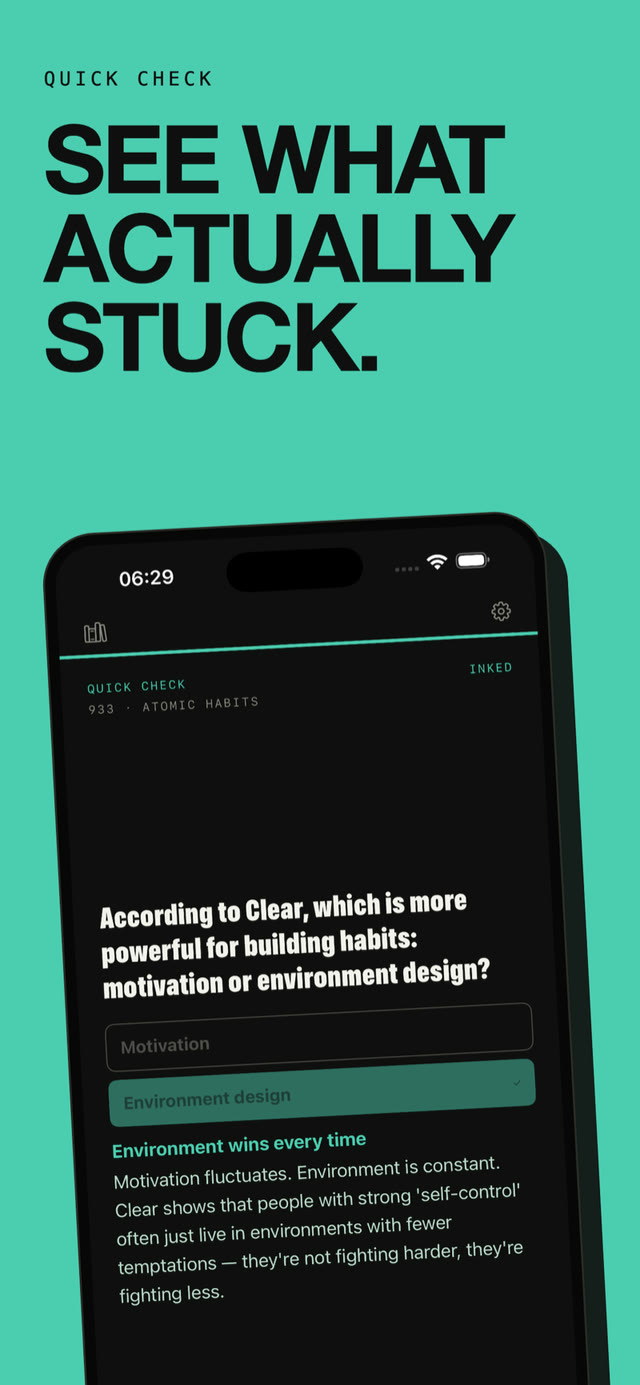
Cards are written from the ideas, in original language — no verbatim quotes, and no substitute for reading. Kern assumes you read the book. Its job is making sure the reading wasn't wasted.
Your library, one feed
First book free. No account, no sign-up, works offline.
Download on theApp StoreFrequently asked
Can't I just use Anki for books?
Absolutely — if you're willing to write the cards. Anki is excellent and endlessly configurable. Kern trades that control for zero setup: the deck exists seconds after you type the title, and every book shares one review feed. We compared the options in Anki alternatives for books.
How many books can I keep alive at once?
More than you'd guess. Because intervals stretch as memories strengthen, older books cost only a few reviews a month. The daily five minutes mostly goes to whatever's newest or slipping.
What happens if I stop reviewing?
The forgetting curve resumes — that's physics, not punishment. In Kern you'll see it: neglected books visibly fade on the Wall, and picking them back up re-inks them.